Over the past five years or so, social marketing has become an incredibly important channel for marketing professionals to get the word out to prospective buyers. While business-to-business (B2B) selling seems to have been around forever as a means of persuading one or more purchasing influencers and decision makers, social marketing has evolved much further. Today it is a multichannel outbound platform that allows a provider to reach many relevant targets by using highly scalable tools and content. However, if not done right, social channels can create more noise than interest, cause confusion and end up damaging the brand rather than creating awareness. To make sure social marketing is not perceived to be anti-social, annoying or confusing, organization needs to deploy a highly focused strategy.
Social marketing is not about setting up a bunch of channels and pushing random third party content via those channels. While promoting other people’s relevant or interesting or even controversial content can augment an organization’s messaging, it is absolutely essential for anyone using social media for marketing to use it highly strategically. The following is a brief summary of how to make social marketing effective without overstepping the mark:
- Build a messaging strategy - Setting up social channels without thinking through your content strategy can create serious confusion and messaging dilution. Think about your channels. LinkedIn content needs to be more professionally focused than information you may share via Facebook (personal) or Twitter (topical) or Pinterest (lifestyle). While you need to think carefully about everything you post online, anything shared via a business-focused channel like LinkedIn requires a degree of strategic analysis to ensure it represents your and your organization in a value added way – as opposed to sharing a news story or an interesting quote via a more social channel.
- Setting up the social channels - It's important to think through the channels that you're going to use for social marketing. The majority of businesses will find value in four channels: LinkedIn, Facebook, Twitter, and Google+. If you're in B2B environment then these should satisfy your requirement to reach out to business targets. As long as you are providing value-added content, then over time you should be able to build a decent sized community of similar-minded individuals that regularly connects and interacts with you.
- Managing customer feedback - About a decade ago, B2B companies managed their brands with an iron fist. The only unregulated area they had to worry about were customer forums, but since those were mostly walled off from the general public, discussions had little impact on other prospects or customers because moderators had control over what was posted. However, things have completely changed over the past decade. Now, everything and anything can appear online without a moderator and companies not aggressively managing and proactively responding to negative customer feedback, without a proper resolution plan, will quickly see their brand go haywire.
- Tying it together - Five core activities - best practices content, customer success stories, company news, customer comments (positive and negative) and industry news – can collectively create a platform for content-based engagement via a variety of social channels. However, in the same way that Public Relations (PR) activities were once previously tightly controlled through a small number of channels but now need to encompass any and all online channels social channel-based prospect and customer engagement needs to be approached holistically.
- Tracking ROI metrics – the PR industry has evolved its method of evaluating ROI, and is now capable of providing not only coverage-based PR metrics, but also ROI metrics from social marketing. However, channel proliferation – the creation of specific channels to promote products or concepts - continues in many companies. While when done correctly, these channels can be useful, they can also lead to fragmentation of marketing effort and an inability to accurately measure ROI. Rather than ultra-fragmenting the medium, it is more valuable to focus content distribution via a few focused channels. This approach can make a significant impact on digital content engagement.
Done correctly - by picking the right messaging strategy, using the right social channels and tracking metrics to focus the conversation with prospects and customers - social marketing can be highly effective. However, overdone, or under-strategized, badly conceived social marketing only creates chatter, noise and confusion. Antisocial in the extreme!
Within this context, it is essential for any B2B technology provider selling though the channel to take a thoughtful, cohesive approach towards rolling out a social marketing strategy. Just adding social syndication tools or web syndication tools for channel partners is not enough. Channel Marketing Automation platforms like ZINFI can help vendors create a global channel marketing infrastructure, allowing partners to syndicate content via their social network. However, effective use of this highly scalable infrastructure requires thoughtful planning and distribution of content by the technology vendor to create genuine value from its distributed digital marketing effort.





 Partner Ecosystem Playbook: Build, Scale, Succeed Best Practices
 Mastering LinkedIn: Building Personal Brands for Social Selling
 Unified Communications: The Backbone of Modern Digital Growth
 The Channel Sales Playbook: Skills, Strategy, and Growth
 Blueprints for Vertical Success Best Practices
 The Future of Partner Enablement: From Enablement Gaps to Global Advantage
 Reimagine Sales Development. Build a Smarter Prospecting Engine
 The Zero Trust Imperative: Fortifying Enterprise Security Against AI-Driven Threats
 PartnerOps Excellence: The Definitive Guide to Scalable SaaS Ecosystems
 The Modern Partner Ecosystem Best Practices
 Partner Marketing Reimagined: Strategies for Agile, Insight-Led Growth
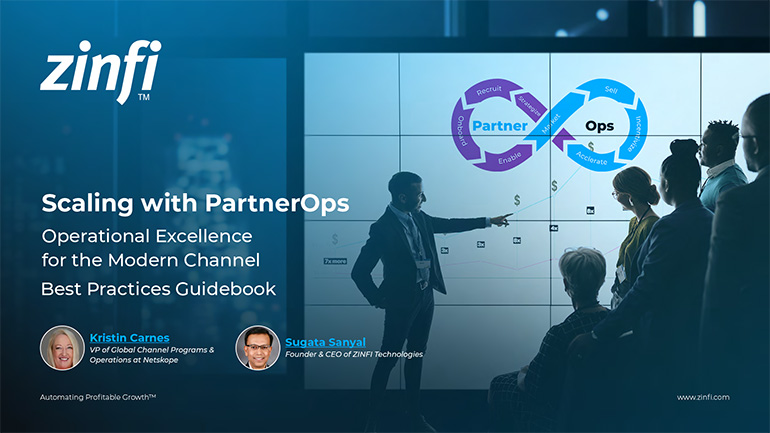 Scaling with PartnerOps Best Pratices
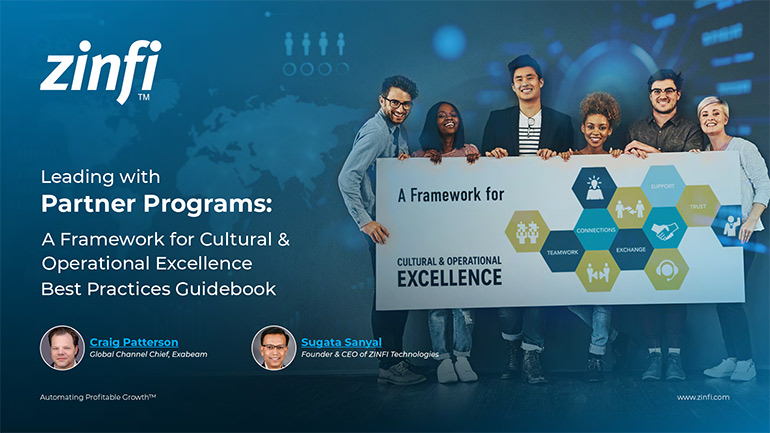 Leading with Partner Programs Best Pratices
 The Partner-First Blueprint: Scaling Trust, Intelligence, and Ecosystem Growth
 Unlock Scalable Growth with The Partner Marketing Growth Blueprint
 From TikTok to LinkedIn: Social Selling Across the Generational Divide
 Scaling Partner Ecosystems: From Enablement to Intelligence